Wednesday, 1 June 2016

Audi eyes No. 1 slot in luxury car market by 2015

It seems the fight between German auto majors for leadership position in the luxury car space in India is heating up, with Audi upping the ante in an attempt to unseat the top two firms, BMW and Mercedes-Benz, by 2015.

"Having recorded 95% growth during the January-August period here, India is well ahead of other growth markets for us globally and we are confident that we are on track with our vision of being the No. 1 luxury car maker in India by 2015," Audi India Head Michael Perschke said in a statement.

In August, Audi reported a 100-plus% jump in sales to 510 units, as against 250 units in the month-ago period. During the January-August period, its sales jumped a full 95% to 3,655 units from 1,876 units in the corresponding year-ago period.

On the back of these robust sales numbers, Audi, which is placed at No. 3 in the luxury car market in terms of sales numbers, has set a target for sales of 5,000 units this year.

To attain this coveted position, the Volkswagen Group company is ramping up its dealership network and hiring more personnel.

"We will be hiring at least 600 more people and raising our dealerships to 25 by the end of 2012. We will also enhance our portfolio with the launch of the Q3 (model) next year," Perschke said.

At present, BMW is the No. 1 luxury car-maker in the country, a position it snatched from Mercedes-Benz for the first time in 2009.

While Mercedes sold 4,890 units in January-August this fiscal, a growth of 40% from 3,495 units in the year-ago period, BMW had sold 5,364 units till July.

Even as these foreign car-markers report high sales numbers, domestic auto majors have been witnessing a sharp decline in sales since last July, when overall sales slumped by 16.7% year-on-year.

August was no better, with domestic auto-makers' sales falling by over 10%.

The rapid expansion of the luxury car market in India

The market for premium vehicles in India is expected to grow exponentially over the next few years on the back of a rising high net worth individuals’ population; low current ownership rates, local investment by foreign car companies and a focus on compact vehicle sales. IHS Automotives estimates the luxury cars segment will grow from 32,000 units in 2013 to 50,000 units by the end of fiscal year 2015.  Combined sales volumes in 2018 for Audi, BMW, Mercedes and Jaguar Land Rover are forecast to increase by 168 per cent.
India is the world’s seventh largest market for ‘passenger vehicles’ and firmly focused on the top spot. According to a 2014 report by India’s Economic Times (ET), this growth is fuelled by the luxury car market, which has grown from 4,000 units in 2007 to 33,000 units in 2014 and is projected to reach 100,000 units by 2020.

“India is the world’s youngest consumer of luxury cars”

The luxury car market in India has grown much faster than the mass-market segment and the trend is expected to continue as young, educated Indians enter this market with high levels of disposable income. “India is the world’s youngest consumer of luxury cars” said Joe King of Audi in an interview with Times of India. The average age of a luxury car owner in India is 35 compared to a global average of 43-45 years.
Historically, luxury car buyers used to come from wealthy cities such as Mumbai and Delhi. This is changing as car makers target other cities with untapped potential. “Along with the metropolitan centres, we foresee growth potential among the young achievers, predominantly from tier 1 and tier 2 cities, which have a dynamic attitude and are technology savvy,” Philipp Von Sahr, president, BMW Group India said in an interview with ET. The high demand for luxury amongst India’s well-heeled, highly educated classes is paralleled by equally high demand from India’s aspirational young middle class.
The Indian luxury car market is dominated by Audi, 2015’s market leader with sales of 11,292 units; followed by Mercedes with 11,213 units and BMW which sold just over 7,000 units. They account for 95% of India’s luxury car market and are now focusing on the‘millennial generation’ looking for compact saloons as a smaller, less expensive alternative to premium luxury cars. Mercedes expects its compact cars sales to position the company as market leader in the Indian luxury automaker industry.

Foreign companies have begun investing locally

Realising that the high cost of importing luxury cars is unsustainable, foreign companies have begun investing locally by building plants, opening more points of sale and investing in sales, marketing and advertising and customer service. Mercedes, currently the fastest growing luxury brand in India, has doubled its production capacity to 20,000 units.
Audi’s experience in China shows the advantages of gaining an early foothold in the market. Audi entered China before its other German competitors; China now accounts for 30% of its sales.

How The Luxury Car Market is Affecting The Design of Everyday Family Cars


Defining luxury

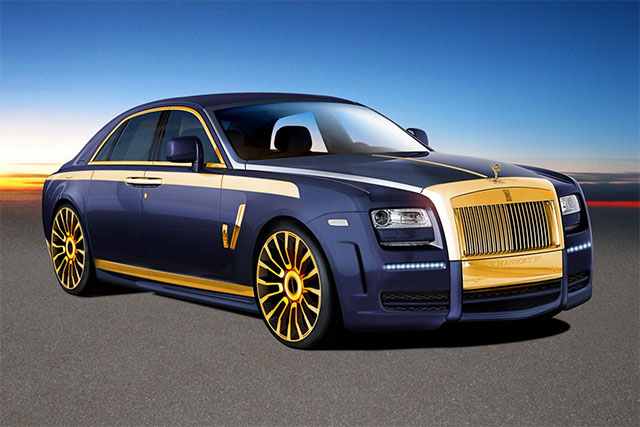
For many, luxury in cars was mainly about the interior. Big names, such as Rolls Royce, focused on leather upholstery and wood panels to ensure their luxury credentials, but nowadays such details are not enough. Premium upholstery is still a major factor in luxury, but perhaps the key indicator of premium manufacturers is their willingness to customize according to individual consumer tastes. For example, different parts of the world have different preferences as to which type of wood and leather are used, just as much as the gadgets that can be included.
But there is still a huge market for luxury cars. For example, Lord Laidlaw makes generous donation to several charities and gave $2 million to set up the Laidlaw Centennial Scholarship Challenge Fund, giving graduates the opportunity to secure jobs and further their business education at an international level. He helped fund this by auctioning no fewer than 17 luxury classic cars, including a Maserati, Porsche and Ferrari. Such is the demand for these types of cars that he was able to make around £17 million.
The idea of customization is trickling down to the more mainstream manufacturers, such as Ford and Volkswagen. These and other such companies are producing vehicles that, whilst not being budget models by any stretch of the imagination, are nonetheless more competitively priced than luxury models. Ford, for example, may offer premium leather upholstery that is sourced from a particular area and is hand stitched. However, such brands may focus more on providing comfort for the human form whilst driving rather than upgrading the interior with luxury detailing, working on the belief that luxury does not always equate with comfort.
So, apart from the interiors what are mainstream car manufacturers learning from premium models? Well, mainstream manufacturers seem to be focusing on exteriors rather than interiors. So we are now seeing sleek rooflines, undulating side contours, and fluid curves on mid-range cars. Even cars that rely upon their classic or retro look are being brought up to date.
However, non-premium car manufacturers need to be careful that they do not end up being sued for stealing the designs of luxury carmakers. Even the smallest, finest details of a car’s design can be desirable elements, which is why luxury car maker Aston Martin, the favorite of fictional British spy James Bond, sued another company for allegedly copying its wheel and headlight design, as well as its famous logo.
Consumers need not pay premium prices to enjoy a little luxury in their chosen mode of transport. Mainstream car manufacturers have identified the desire for luxury detailing and responded to it with affordable, great-looking models.

Global leader BMW ranks third in Indian luxury car market

The Indian luxury car space depicts a contrasting picture with BMW, the global leader lagging behinds its German peers for third successive year after flat sales in 2015 for the once market leader in the top-end of the passenger vehicle market.
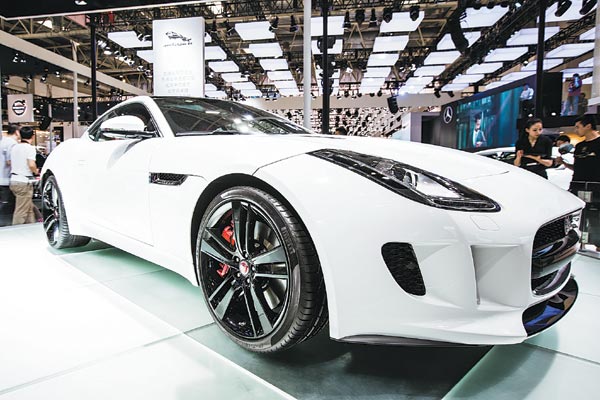
BMW sold a total of 6,890 cars in 2015 (6,550 BMW and 340 MINI), while its peers scaled new heights by selling record numbers in the same time. Mercedes-Benz emerged as the new leader with 13,502 units sold in January to December 2015, whereas 11,192 units delivered by Audi to its customers last year was its highest.
BMW is going through a rough patch as stagnating demand for its sedans and diminishing appeal for its SUVs have kept it in the third spot. It was the luxury market leader in India till 2012, when it lost the spot to Audi and has since failed to recover.
Mercedes-Benz, which became No. 2 globally late last year, gained the most in the Indian customer's mind on the back of its new crispy designs as seen in the CLA sedan and GLA compact SUV, helping the company regain the pole position on stellar sales after an eight-year gap. It had lost the leadership position in India to BMW in 2007.
Experts and analysts say that BMW lagged on design fatigue even as its rivals have come up with more competitively priced products and new styles to attract buyers as the overall Indian automobile market remained largely sluggish.
"Audi and Mercedes benefitted from their newly launched products, which are competitively priced to cater to the wider Indian audience," said Amit Kaushik, Country Head, JATO Dynamics, a UK-based automotive consulting company. "BMW has failed to respond quickly to competition even as its sales have failed to grow in the highly competitive market scenario."
Despite the stagnation, BMW is aiming at sustainable operations in the Indian market. BMW Group India (BMW and the MINI Brand) President Philipp Von Sahr says the focus remains on long-term sustainable growth in India. "We are looking at several aspects and prefer to have delighted customers with high luxury quotient and also maintain strong partnership with our business channels like suppliers and dealers," he said.
The luxury car market has not witnessed huge demand or growth in the past few years, though it has not shrunk like the mass car segment. A total of 33,007 luxury cars were sold in 2015, an increase of 21 per cent over 27,275 luxury cars sold in 2012. This is without the sales of Tata Motor-owned Jaguar & Land Rover, which did not share sales data for the past two years.
The luxury car market may suffer a setback in 2016 as the Supreme Court has banned registration of all new two-litre or 2,000-cc diesel cars in Delhi-National Capital Region for three months till March 31. It is bound to affect sales in the last quarter of the fiscal.

Race is on to luxury car market

Report: Global icons localize to be competitive in fierce market
Following a nearly five-fold increase in sales over the last decade, automakers are further ramping up efforts in the China market as premium brands continue to rise, according to a recent report by PricewaterhouseCoopers.
The multinational professional business advisory forecasts the Chinese luxury car market will have annual sales surpassing 3 million units by 2020.
In the last decade, the overall market has expanded from 4.3 million to 19.9 million vehicles purchased, a trend that continued despite the global downturn and other automotive markets in steep decline.
And the luxury segment even grew as the Chinese auto market expanded only marginally in 2011. That year, it had a startling 54.5 percent rise.
By the end of 2013, the segment was still enjoying double-digit growth to reach sales of 1.4 million units, second only to the United States. China is expected to surpass the US in luxury sales by 2016, said PwC.
The proportion of affluent consumers in China is growing rapidly, both in volume and age range. Younger first-time owners have increasing buying power that helps fuel the luxury segment, the company's research concluded.
"Foreign luxury brands seem to appeal to young buyers as they perceive them as safer, more technologically advanced and better quality," said Wilson Liu, head of PwC's China Automotive team.
"On the other hand, a trend toward vehicle downsizing amid more stringent emission standards is also reflected in the luxury segment," said Liu. "Entry-level models are increasingly available and appealing to younger, first-time buyers."
Luxury vehicles have a projected compound annual growth rate of 11.5 percent from 2013 to 2020, almost double that for standard, non-premium light vehicles, according the report.
It forecasts that the penetration rate for luxury vehicles will even surpass the 10 percent share seen in today's mature markets such as the US

Looking for a Reliable New, Used or Demo Car?

If you’ve been searching for a new, used or demo car without success, click online. Here you can find Australian family owned, family driven companies that have a huge selection of motors. All new, pre-owned or demo cars are workshop tested and extremely reliable. Prices suit most people’s budgets too. If you’re a little unsure of which car to buy there’s a refine search option where you can choose the:-
  • Category – either a brand new car, a dealer used car or a demo/nearly new vehicle
  • Make
  • Year
  • Price range
  • Body type – cab chassis, coupe, hatch, people mover, sedan, SUV or ute
Get a quotation
To start the ball rolling, why not ask for a quote? There’s a great selection of vehicles to choose from along with the option of being able to subscribe to receive the latest offers and product updates via email. You can also:-
  • Request a brochure
  • Book a service
  • Test drive a car
If you already own a Nissan, online specialists sell genuine parts and accessories like bike racks, child seats as well as many others.
Fleet solutions
Online Nissan dealers like http://www.grandnissan.com.au/n/new-cars/ can also supply small to medium sized businesses with fleet vehicles. Whether you require one or over a hundred motors, there are plenty of options available to you. Don’t hesitate to get in touch with reputable dealers if you need any advice or more information regarding fleet motors. Experts can discuss:-
  1. Which vehicles will suit your needs
  2. Finance
  3. Insurance
  4. Leasing
  5. Servicing
Competitive tenders are available so use the fleet enquiry form or give the company a call for a no-obligation free review soon.
Check out modern showrooms and display areas
For more info about new, used and demo vehicles, check out modern showrooms and display areas. These facilities give you the opportunity to browse the many ranges of Nissan automobiles. Friendly staff can also give you lots of info about certain cars, the mileage, colours and finance. You’re sure to buy the perfect motor from award winning dealerships and enjoying an excellent sales service. Your buying experience offers:-
  1. Courtesy pick ups
  2. Convenient drop offs
  3. Care and professionalism
  4. Modern workshops
Drive a brand new car
There’s nothing like driving a brand new car. Fabulous Nissan models are fantastic to look at, easy to drive and will definitely stand the test of time. Why not try a few different models to see which one is best for you like:-
  • A Micra
  • A Pulsar Hatch
  • 370Z Coupe
  • A Qasqai
  • An NP300 Navara
Whichever type of car, cab or roadster you decide to buy, you will find a good value for money motor. Online Nissan dealers provide high performance vehicles that are designed to inspire and thrill customers. Click on exciting online models, new, used or demo, to find the perfect motor that suits your needs and your lifestyle.